What do business and conservation have in common?
As it turns out, a lot.
Business operations have created models that guide appropriate decision-making despite limited information, all while keeping costs low. Similarly, wildlife health often requires budget decisions despite limited or incomplete information. So we partnered with business researchers to explore ways to improve surveillance efficiency. Our goal is to provide agencies with ways to optimize their operations for prevention, surveillance, and management.
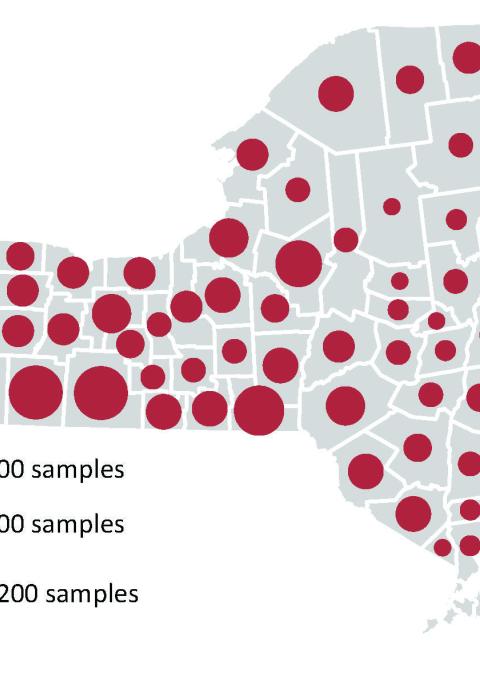
Led by Dr. Jue Wang, Associate Professor at the Smith School of Business, Queen's University, Ontario, Canada, this work meshes innovative science in operations management and analytics with the most pressing needs in wildlife health and conservation. Our publication, entitled 'Strategic Planning of Prevention and Surveillance for Emerging Diseases and Invasive Species,' is a novel model that can aid wildlife agencies in planning cost-effective disease surveillance across large jurisdictions. This model is also directly applicable to planning disease surveillance by agricultural and public health agencies, as well as invasive species surveillance across conservation areas.
Disease control interventions are most effective when only a few hosts are infected, which is exactly why surveillance is challenging! The subtle beginning of an outbreak means data is scarce, and a thorough investigation is costly. Our model considers disease dynamics and logistical costs of surveillance to pinpoint the best surveillance strategy for minimizing unseen spread and damage up to the moment of first detection. This model is valuable for any planning horizon, at any number of sites, and in any disease/host system of interest.
Code to run the model within the CWD Data Warehouse can be found at the CWHL Git Hub:
Sample Allocation Model Code
The full publication can be found here:
Wang J, Hanley B, Thompson N, Gong Y, Walsh D, Gonzalez-Crespo C, Huang Y, Booth J, Caudell J, Miller L, Schuler K. 2025. Strategic Planning of Prevention and Surveillance for Emerging Diseases and Invasive Species. PNAS. DOI: https://doi.org/10.1073/pnas.2507202122
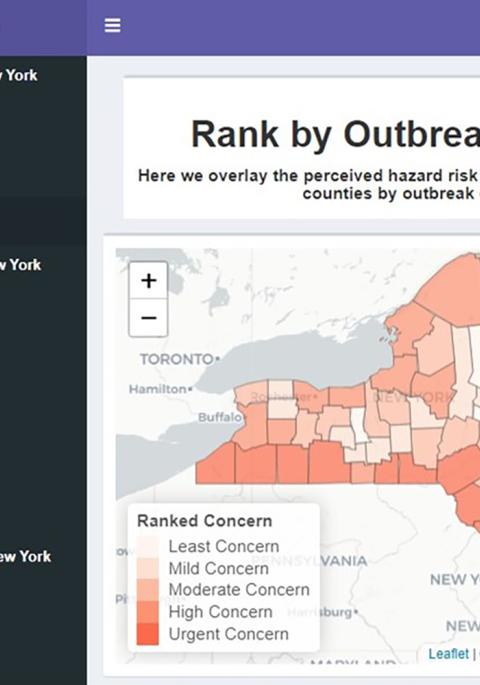
The model is immediately available to wildlife agencies in North America through the SOP4CWD collaboration (sop4cwd.org). The SOP4CWD project, led by the Cornell Wildlife Health Lab, provides a free, automated technological system that enables agencies to manage disease surveillance data and make data-driven decisions to inform conservation outcomes. This model is autonomously integrated into the CWD Data Warehouse, enabling immediate surveillance savings for research on chronic wasting disease.