How do you start looking for a disease in wildlife when it hasn’t been detected in an area yet? Emerging diseases often have risk factors that contribute to the introduction or spread of pathogens. We can leverage those features to identify areas with more threats than others. Some of the risks can be natural, such as migrating species or high-density populations, while others may be caused by human activities, including moving live animals or wild animal carcasses from one place to another. Close proximity to these risk factors can identify areas where increased sampling may be appropriate. There often are particular species, sex, or age classes more likely to test positive than others, so prioritizing those characteristics provides a higher value per test.
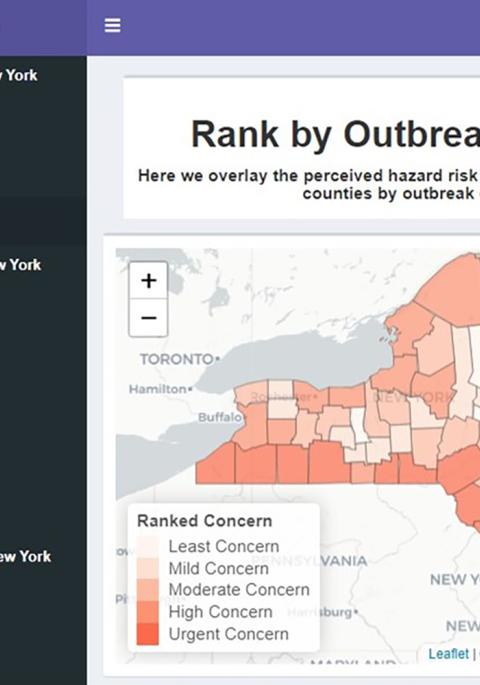
The “Hazard” Model is a risk-weighted surveillance program that identifies areas where threats have accumulated over time and space, having a disproportionate likelihood of disease emergence. We developed the Hazard Model in conjunction with wildlife agencies to be sufficiently flexible to accommodate operational constraints – a welcome capability when organizations may be limited in time or money to conduct wildlife disease surveillance.
We have assisted several state wildlife agencies with implementing the Hazard Model. In the first year of deployment, Tennessee, Alabama, and Florida all detected the first cases of CWD in their state. We are currently working to update to Hazard Model 2.0, which includes additional risk factors more suitable for western states and provinces, including multiple CWD-susceptible species and migratory herds.
The full publication can be found here:
Schuler, K. L., Hollingshead, N. A., Heerkens, S., Kelly, J. D., Hurst, J. E., Abbott, R. C., Hanley, B. J., Collins, E., & Hynes, K. P. (2025). A “hazard model” using risk-weighted surveillance for first detection of chronic wasting disease. Preventive Veterinary Medicine, 243, 106599. https://doi.org/10.1016/j.prevetmed.2025.106599
The Hazard Model is immediately available to wildlife management agencies in North America through the SOP4CWD collaboration (sop4cwd.org). The SOP4CWD project, led by the Cornell Wildlife Health Lab, provides a free, automated technological system that enables agencies to manage disease surveillance data and make data-driven decisions to inform conservation outcomes. This model is integrated into the CWD Data Warehouse, allowing agencies to evaluate where they can adjust their surveillance programs to focus on high-risk areas and emphasize better sampling rather than just “more sampling.”
Code to run the model within the CWD Data Warehouse can be found at the CWHL Git Hub: