Chairman Cox, Ranking Member Gohmert, Members of the Subcommittee, thank you for calling this hearing and inviting me to testify on chronic wasting disease (CWD), which I believe to be the most serious threat facing wild deer and elk populations in North America today and likely into the future. Cervids, or members of the deer family, are dying from CWD, and this disease has far-reaching biological, social, and economic ramifications for public health, agriculture, and the recreational hunting industry.
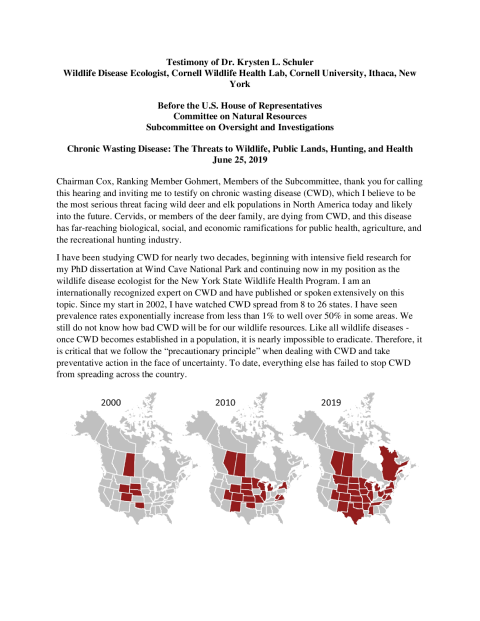
I have been studying CWD for nearly two decades, beginning with intensive field research for my PhD dissertation at Wind Cave National Park and continuing now in my position as the wildlife disease ecologist for the New York State Wildlife Health Program. I am an internationally recognized expert on CWD and have published or spoken extensively on this topic. Since my start in 2002, I have watched CWD spread from 8 to 26 states. I have seen prevalence rates exponentially increase from less than 1% to well over 50% in some areas. We still do not know how bad CWD will be for our wildlife resources. Like all wildlife diseases - once CWD becomes established in a population, it is nearly impossible to eradicate. Therefore, it is critical that we follow the “precautionary principle” when dealing with CWD and take preventative action in the face of uncertainty. To date, everything else has failed to stop CWD from spreading across the country.
As of June 2019, CWD has been discovered in 26 states, four Canadian provinces, and four other countries: South Korea, Norway, Sweden, and Finland. New York is the only state that has been able to eliminate CWD in wild deer and remain CWD-free. In 2005 after CWD was found in two captive herds in New York State, the Departments of Agriculture & Markets and Environmental Conservation worked together to quickly depopulate those animals and sample wild white-tailed deer in the disease containment area. In the first year, two wild deer were found to be infected with no subsequent detections more than 50,000 tests. The cost for the 2005 wildlife agency response was well over $1M. Rather than drop its guard, New York has maintained an aggressive stance toward CWD. Since 2012, we have used a risk-based surveillance plan to detect the earliest incursion of the disease, and the state has Interagency CWD Risk Minimization and Response Plans in place that have been the model for programs in other states.
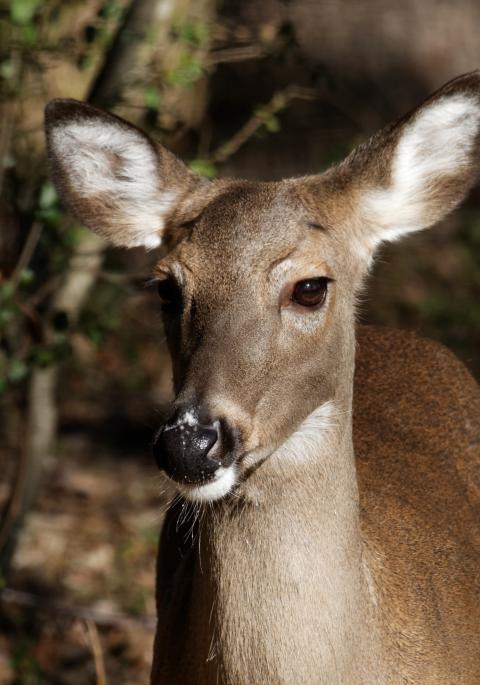
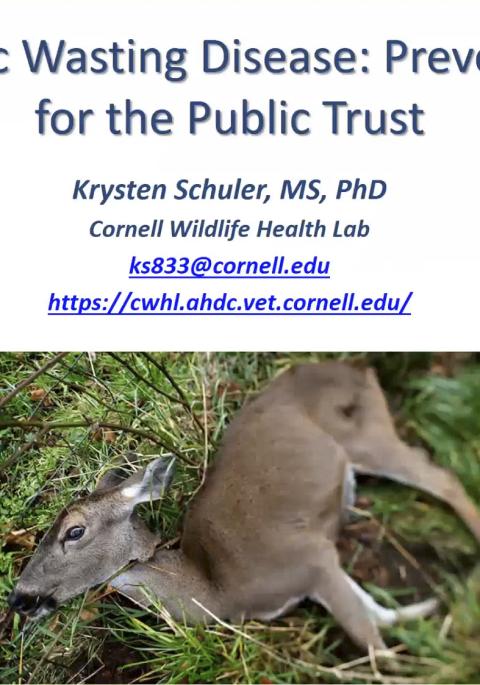
We do not have a long history with CWD. Its presence in wild animals makes it unique and exceedingly difficult to study. It was first described in 1967 in a captive deer and elk research facility in Colorado, but not detected in the wild until 1978. It affects all native North American cervid species: white-tailed deer, mule deer, elk, red deer, moose, reindeer, and caribou. In the brief clinical phase of disease, animals infected with CWD have progressive weight loss, their ears droop, they walk in circles, drool, and appear to lose their fear of humans. An animal may be infected for a year or more before the end stages of the disease are apparent. Transmission is very efficient and can occur from animal-to-animal or from environments that have been contaminated. Infected animals are more likely to be killed by a hunter, predator, or vehicle; and therefore, do not live as long as uninfected animals. Male white-tailed deer, the animals most sought after for trophies and least likely to be tested as they are handled by taxidermists and mounted, are three-times more likely to be infected than females.
Research studies in Wyoming have shown that heavily infected white-tailed deer populations decline by 10% annually, while mule deer decreased more significantly at 21% annually. Elk populations decline when CWD prevalence is above 13%. State-funded research in progress in Wisconsin is looking at the potential decline of eastern white-tailed deer populations.
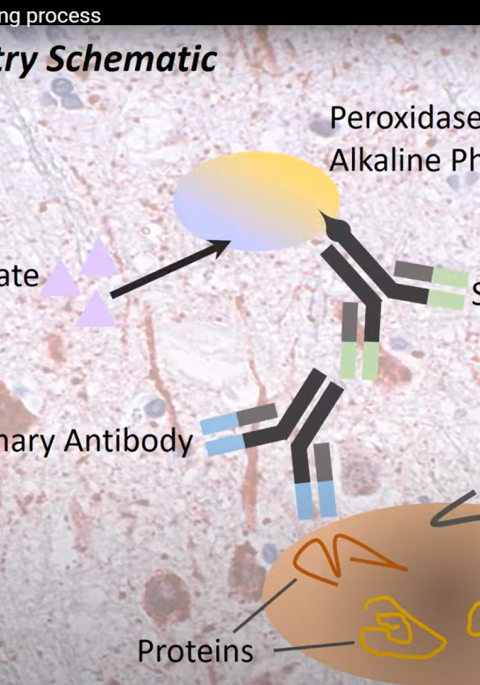
CWD is in the family of universally fatal diseases known as transmissible spongiform encephalopathies (TSEs). Misfolded proteins called prions enter the body and convert normal cellular proteins to abnormal forms that cannot be broken down via our normal body processes. The prion then multiplies in the body and causes degeneration of the central nervous system after a prolonged incubation period.
A prion is not a bacteria or virus. There are no treatments available. Antibiotics are not effective on prions. There have not been any successful vaccine trials in cervids. Deer and elk show no true genetic resistance (immunity). Research has identified certain genotypes in deer and elk that will live longer with the disease, which only gives infected animals more time to spread additional prions on the landscape in their excreta (e.g., saliva, feces, and urine). There also appear to be differences in prion strains that can influence disease progression, along with dose, route and time of exposure.
TSE diseases occur in humans spontaneously, through genetic predisposition, by accident (iatrogenically), and through ingestion of infected tissues, as was the case of bovine spongiform encephalopathy (BSE or “mad cow” disease). These rare events are difficult to study. There is some research being done to investigate the similarities between TSEs and other neurodegenerative diseases like Alzheimer’s. In animals, “mad cow” disease dominated the headlines in the early 1990’s and resulted in the destruction of over 4.4 million cows in the U.K. It wasn’t until 1996 that young people began to be diagnosed with variant Creutzfeld-Jakob disease (vCJD) from eating infected beef. Worldwide, 231 vCJD cases have been reported as of 2018.
Although there are no known cases of CWD in humans, there is considerable concern that prions are capable of adapting to their host and could someday infect humans. The Centers for Disease Control and Prevention (CDC) recommends no one knowingly consume CWD-positive venison. A study currently underway has found macaques (monkeys) developed disease after being fed infected brain tissue and skeletal muscle (i.e., venison) from CWD-positive deer. These findings are the basis of the CDC’s recommendation that anyone hunting in a CWD-endemic area have their animal tested before consumption. Prions can also bind to or be taken up into plant tissues and spread disease. Experimental food crops testing positive thus far include alfalfa, wheat, corn, and tomatoes. These findings present a potential route of prion exposure for wildlife, domestic animals, and humans following consumption of these plants. Additionally, there is concern that other countries may ban export of crops from areas with CWD. Agricultural commodities, such as hay and straw, in CWD-affected areas may be baled with infected feces and moved interstate or internationally. The European Food Safety Authority recognized this risk in their assessment of CWD in Norway. Consequently, Norway banned hay and straw imports from North America that do not have an accompanying veterinary statement verifying the products originated from a CWD-free zone.
CWD appears to be more similar to scrapie in sheep than BSE in cows. Scrapie has been described for several centuries and despite intensive breeding efforts toward genetically resistant animals, scrapie has not been eradicated. CWD does not appear to transmit naturally to domestic species, such as cattle, sheep, and goats; however, these animals can develop the disease if they are inoculated with CWD-infected material into their brains.
Prions are one of the most resilient pathogens known. They are very resistant to high heat and harsh chemicals. Prions will bind to soil particles, particularly those found in clay soils, and remain infectious in the environment. CWD prions are known to last at least two years; a study of scrapie prions found infected farms retained infectious prions after 16 years.
Given the disease’s wildlife perpetuation and environmental contamination, CWD is likely not eradicable. It is, however, preventable and manageable. Large sections of the country have not encountered CWD yet and can take steps now to keep prions out. As I noted earlier, New York is the only state to eliminate CWD after detecting it in free-ranging wild deer. Illinois has maintained a low prevalence rate through continuous and aggressive management activities. The Association of Fish and Wildlife Agencies has recently approved a Best Management Practices guidance document for CWD prevention, surveillance, and management.
Other countries are also taking steps to control CWD. Norway detected CWD in a reindeer herd in 2016. In short order, it depopulated the entire herd of 2,400 animals and is keeping that area fallow for five years. The country increased its testing to over 35,000 animals annually. This is the strongest example, to date, of how early detection followed by aggressive intervention offers promise for CWD eradication.
At its core, CWD erodes our public trust resources. Because the public is told not to consume infected animals, hunter participation has decreased. For example, 37% of hunters said they would stop hunting if a hypothetical CWD prevalence was 50% in their state. Consequently, CWD puts a economic strain on state agencies revenue due to declines from fewer license sales. Additionally, financial and personnel resources are often redirected when a CWD outbreak occurs. For example, an audit following a CWD outbreak in Wisconsin showed that the Department of Natural Resources bore the brunt (83%) of the $32M spent trying to eradicate the disease in the first five years after its discovery. That money was not spent on other natural resource programs. Finally, the response to CWD has generated significant mistrust of agencies in several states, including Wisconsin and Pennsylvania. A subsequent lack of public cooperation has hindered disease response actions in those states, as the ability to use hunting as a population management tool is diminished.
Although management of free-ranging cervids is the prerogative of states, CWD is a potential public health and natural resource crisis that requires federal support. Congress appropriated between $14-18M annually from FY2003 through FY2011 for CWD. Since that time, USDA has received $1-3M annually for cervid disease management, not exclusively CWD. Funding for indemnity payments to captive cervid operations is limited to $1M annually, which is not been sufficient to compensate owners for depopulating infected herds. Consequently, some of these herds retain their CWD-positive animals and pose a significant risk to wild free-ranging cervids outside the fence.
The biggest risks for spreading prions is via movement of subclinically infected live cervids and their parts or products. Both the captive cervid industry and wildlife agencies move live cervids intra- and inter-state. Hunters regularly travel hundreds of miles to other states and provinces to hunt. An analysis of successful hunters in the four-county region of Wisconsin with the highest rates of CWD showed that over 32,000 deer were taken and that a “hot zone” carcasses went to 49 different states. Some of these areas have prevalence rates over 50% in adult males and 35% in adult females.
There is currently no federal funding available for CWD efforts outside of traditional research channels (i.e., NSF and NIH). Any meaningful strategies and science to combat CWD will require a long-term approach with sustained state and federal efforts. Future needs include:
- Sustained fiscal support for state and federal wildlife agencies to invest in preventative strategies, conduct surveillance, execute management actions, and provide improved education and communication to stakeholders;
- Financial support to state and federal veterinary and wildlife diagnostic labs to update equipment and support staff to improve turn-around time for results;
- Research funds to work toward breakthroughs in new testing methods, sampling strategies, vaccination trials, modeling activities and environmental remediation;
- Improved support from stakeholders up through their elected officials for interventions, especially when using the currently available management tools.
I have seen financial resources for CWD response, research, and outreach ebb during my tenure. As funds have dried up, the public’s knowledge and support for preventative efforts has waned as well. We need to raise this disease to a national level of prominence and make it a top priority, not just for the recreational sporting community, but everyone from the naturalist to the politician.
Thank you again for the opportunity to share my statement. I would be pleased to answer any questions you have.