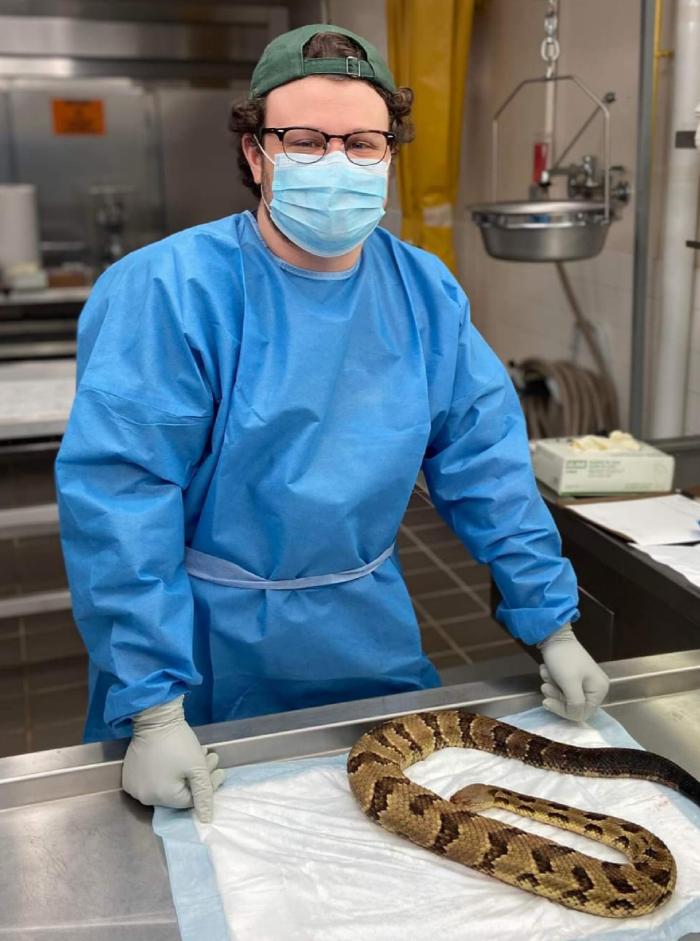
Wildlife Technician II: Samuel Silverman
As a Wildlife Technician 2 for the NYS DEC’s Wildlife Health Unit, my busiest time of year runs from fall through early spring. Because chronic wasting disease (CWD) and avian influenza (AIV) are two notable diseases we monitor annually, I spend most of this busy season collecting, organizing, and shipping CWD and AIV samples. CWD samples come from hunter-harvested deer, and AIV samples come from wild specimens submitted after mortality events (which typically increase in volume due to AIV in the fall and winter months). While most days of the year focus on necropsies and other routine tasks, my schedule shifts to focus more on sampling for specific disease surveillance.
I wake up at 7:30 AM (technically 7:20, but I have a second alarm at 7:30 as the “alright, time to actually get up!” alarm) and start getting ready for the day. I get dressed, feed my two cats, and make breakfast. My usual go-to is a poppyseed bagel with cream cheese and lox, paired with a decaf coffee with whole milk and a spoonful of sugar. I also pack my lunch the day before, then brush my teeth and get ready to head out the door by 8:15 AM.
Once I arrive at 8:30 AM, I put my lunch away in the break room fridge, sit at my desk, and turn on my computer to check for any emails or messages that need my attention.
By 9 AM, I head downstairs to the necropsy room to package samples collected during previous necropsies. I send these samples to Cornell for diagnostic testing. Ensuring everything is properly packaged for shipment is an important part of the diagnostic process and can make things more efficient on the receiving end. Samples ship overnight in a styrofoam cooler with plenty of ice packs to ensure they don't degrade too much outside the storage freezers.
Packing shipments usually takes 20-30 minutes, and after I pack the sample shipment and get it ready to go, I prepare various skulls and bones to be dried for our dermestid beetle colony.
Using dermestid beetles is a quick, efficient way to clean bones and further analyze any significant lesions or fractures missed during gross examination without disrupting the integrity of the structures. Skulls and bones can also be cleaned for storage or educational purposes, such as forensic evidence storage or museum displays.

Preparing specimens for the dermestid beetles varies depending on how much flesh and tissue need to be removed, but it usually takes me 30 minutes to an hour. I then disinfect and wash necropsy utensils, and restock the necropsy room with all the necessary items: sample jars, absorbent pads, disposable scalpels, examination gloves, and paper towels. I'm done, and the necropsy room is set up. I head back upstairs to check my emails again and catch up on any new messages or requests that have come in throughout the morning.
At noon, it’s lunchtime! As a creature of habit, I usually have the same thing for lunch every day: A microwavable meal (I typically eat the same 2-3 types of meals; usually it’s something like a zucchini pasta or a cranberry bourbon chicken with sweet potatoes and cranberries), an unsweetened raspberry Chobani yogurt, and a handful of mixed nuts and berries.
After lunch, I get ready to process the CWD samples. CWD diagnostic testing is done through a process called enzyme-linked immunosorbent assay (ELISA), and the tissue that is harvested from deer specimens for this process is called the retropharyngeal lymph nodes (RPLNs). Samples sent to us include three types of submissions: whole deer heads, jaws paired with RPLNs, or RPLNs alone.

Depending on the sample type submitted and how many of each, the amount of time spent on collecting, checking, and preparing samples for diagnostic testing shipment varies. Heads take the longest, as RPLNs still need to be collected from the head and aged via teeth wear from the jaw. Jaws sent with RPLNs are from taxidermists partnered with the Wildlife Health Program’s CWD monitoring program, where participating taxidermists are trained to collect jaws and RPLNs from hunter-harvested deer and submit them for CWD testing. We age the jaws, and we check the submitted tissues to ensure RPLN tissue is being submitted and not a different tissue type. RPLNs sent on their own are commonly from regional deer check stations, where DEC staff trained in CWD testing age the deer and collect the RPLNs for testing. Like the taxidermist samples, we check that these vials contain RPLNs and have all the appropriate information associated with the vial.
Once samples are all collected, I clean up the working area and head back to my desk to enter the information collected from the samples into our database. Depending on the sample type submitted to us, the amount of information I need to enter varies, so the time spent on this task can range from a few minutes to a couple of hours.
If time allows, I try to get a necropsy into my schedule, usually a raptor, reptile, or amphibian. Trauma is a common cause of death in raptors and herpetofauna, especially during migration periods, but other common causes of mortality around this time of year in raptors include West Nile Virus and starvation in hatch-year birds trying to survive on their own for the first time.
With the rest of my day, I organize and pack my samples, order tests for the necropsies I performed earlier, and check my email one last time before the end of the day.
At 5 PM, it’s now time to head home! I grab my lunch box and head out to the parking lot, ready to drive home.
I get home by 5:15 PM, feed my 2 cats, then change out of my work clothes and heat up one of the meal-prep dinners I made over the weekend. I usually eat the same dinner all week, typically a honey sriracha chicken stir-fry, chicken korma, or a chicken or pork sheet pan roast with roasted veggies.
I finally settle in by 7 PM, hanging out at my computer desk to talk to my partner and my friends, play video games, draw, watch YouTube, and knit before heading to bed at around midnight, ready to start all over again.