Chemical and petroleum environmental spills are managed by a special team within the DEC, but responding to an incident with oiled wildlife requires special training. With components focused on handling affected animals, decontamination protocols, and human and animal safety, knowing what to do and when is essential to the response.
In February 2026, the New York State Wildlife Health Program hosted the Tri-State Bird Rescue & Research, Inc. (TSBRR) team for an in-depth educational course on how to respond to an oiled-wildlife event. TSBRR has been responding to oiled wildlife events for 50 years and is among a small handful of approved organizations capable of responding to a major spill.
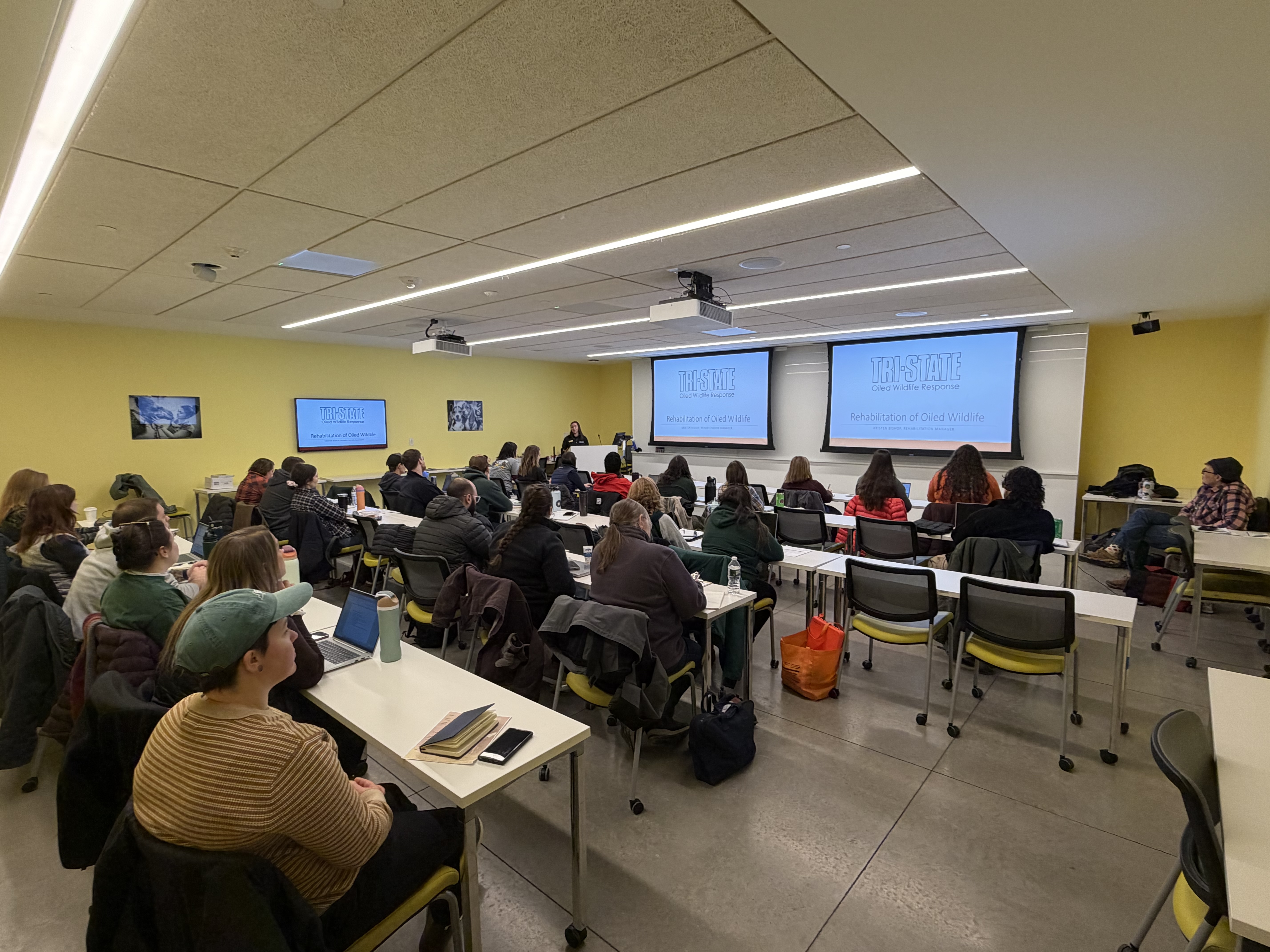
The 8-hour workshop provided DEC staff with the skills of how to properly respond to wildlife affected by an oil spill. Lecture topics included notification procedures, regulations and agencies, integration of the wildlife branch into the Incident Command structure, human health and safety, field and transport operations, data collection and chain of custody, response facility requirements, and animal care.
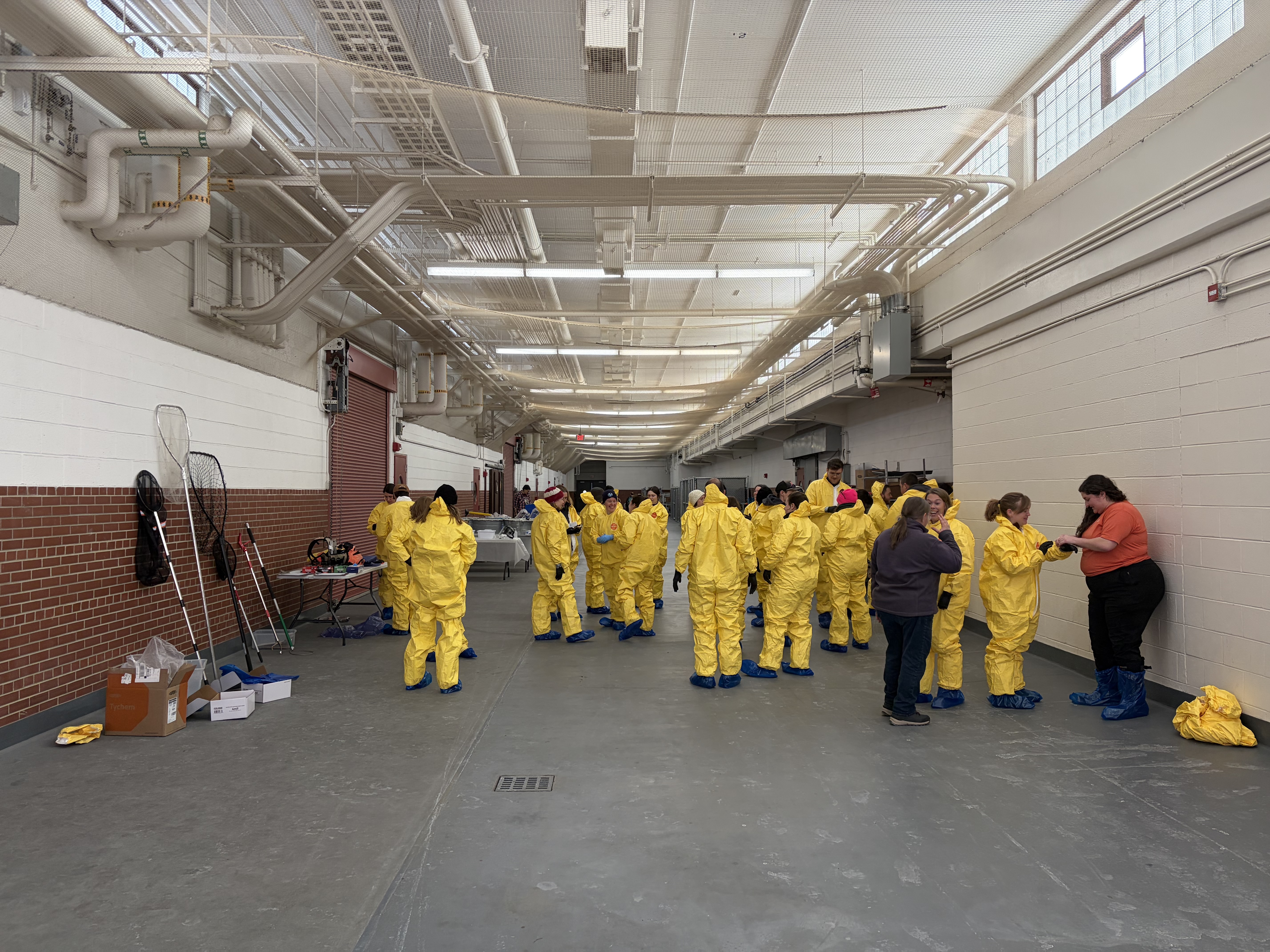
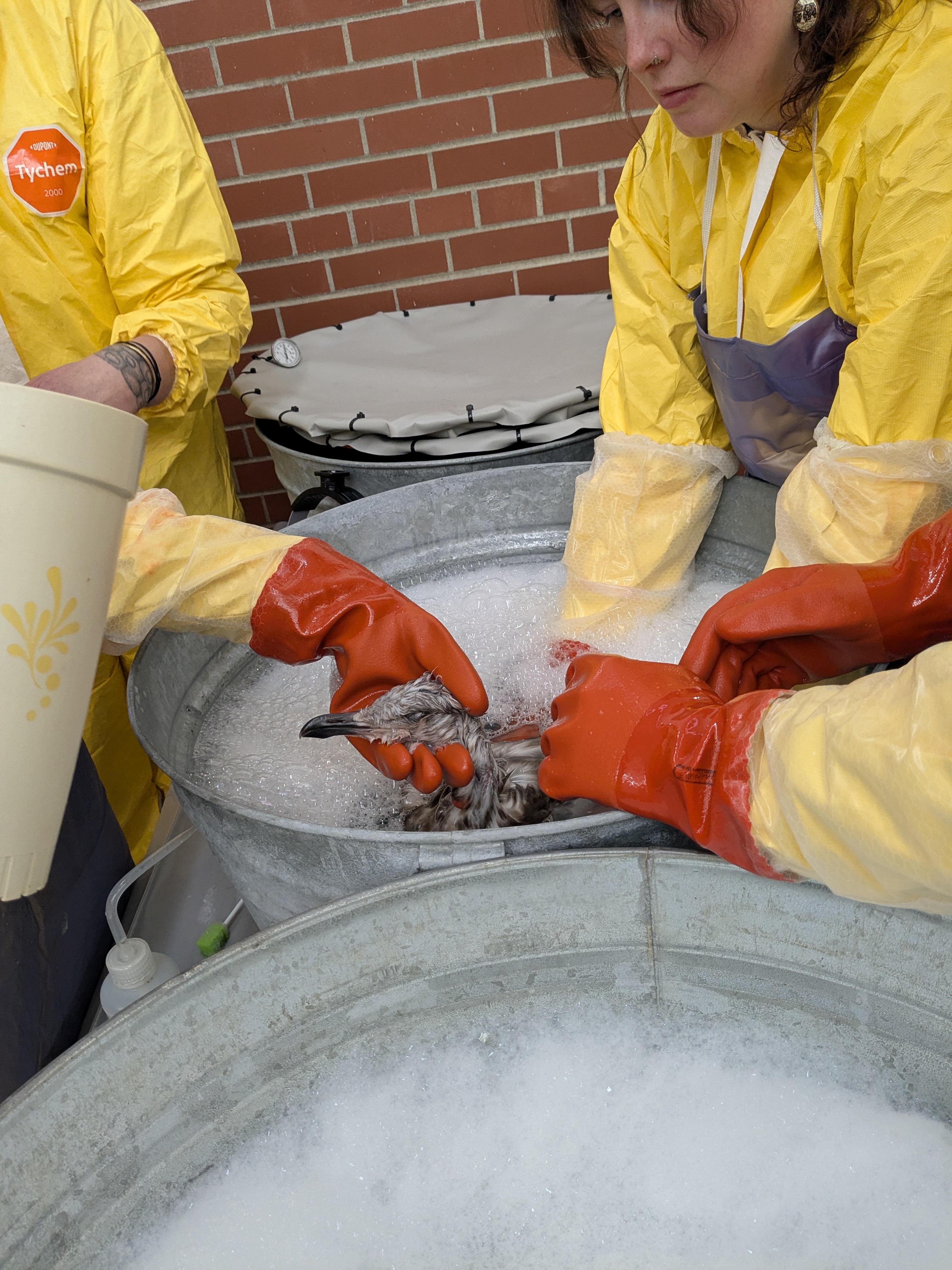
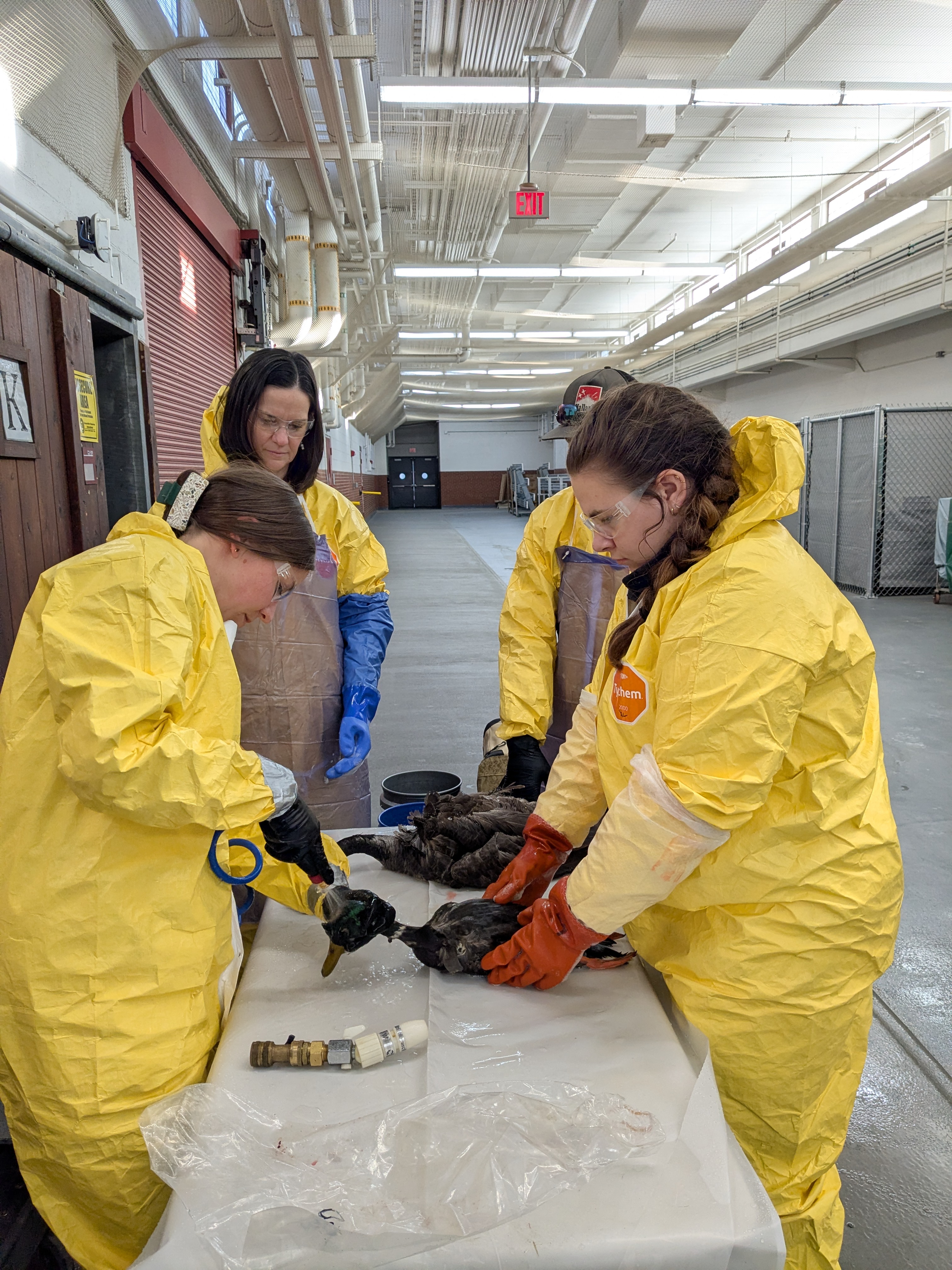
Practical exercises included using bird carcasses to simulate the oil decontamination process. With appropriate PPE, participants learned how to clean oil off affected birds. At decontamination stations, multiple baths were provided, each with temperature-specific water and soap concentrated for the type of oil. Demonstrations incorporated steps that help minimize stress and prevent harm to affected birds.
Click on images to view them larger
This comprehensive course provided attendees with both the preparatory knowledge and practical skills necessary to safely decontaminate wildlife in the field.